
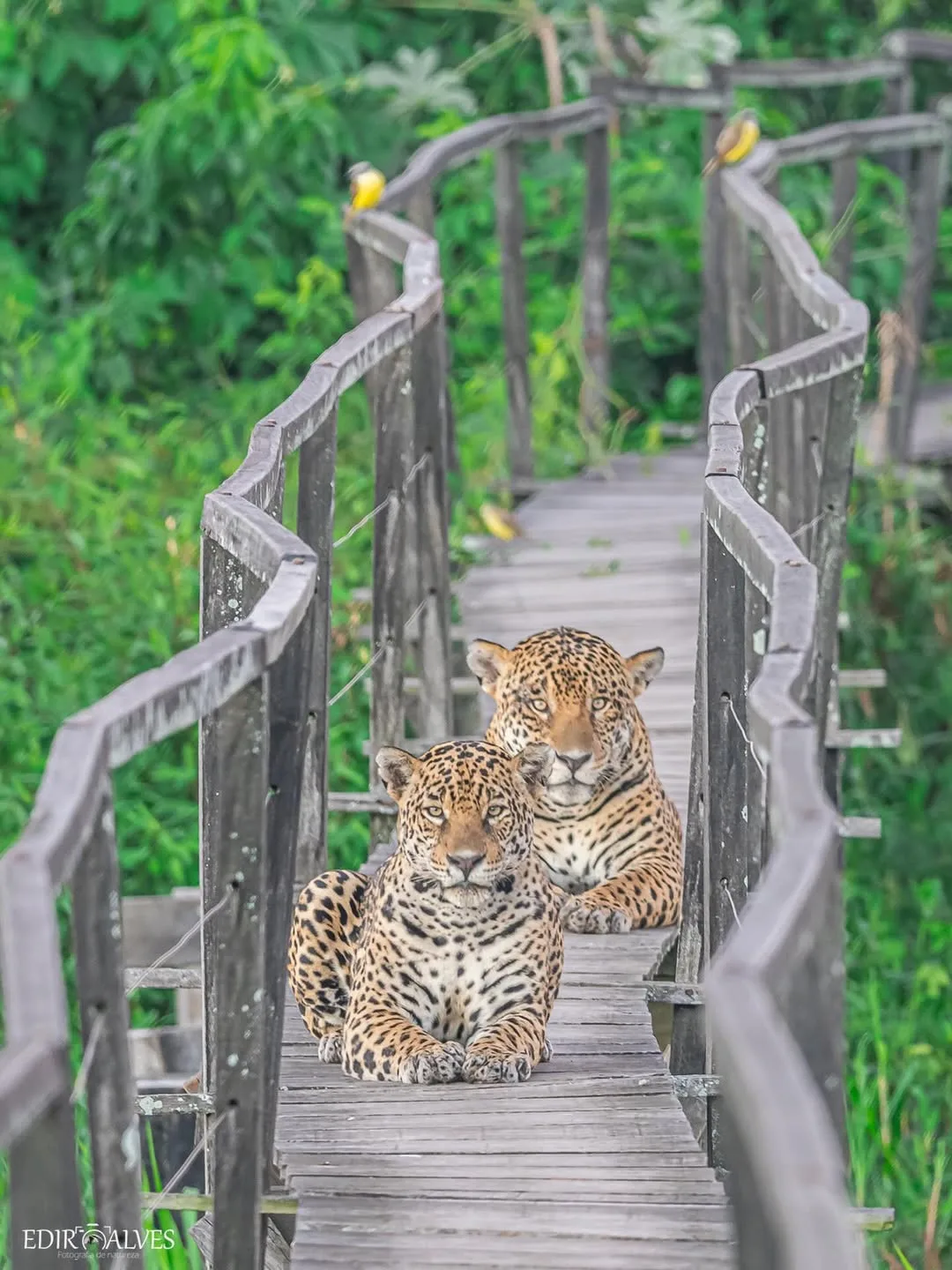
The World's Best Place to See Wild Jaguars
For wildlife enthusiasts and photographers, seeing a wild jaguar is one of the most coveted experiences on Earth. The jaguar is the Americas' apex predator — powerful, elusive, and deeply symbolic in indigenous cultures across the continent. For most of its range, from Mexico to Argentina, the jaguar is a ghost: present but almost never seen.
The Pantanal is the exception. Here, in the world's largest tropical wetland, jaguars are not just present — they are visible. The combination of extraordinary population density, open landscape, and habituated animals has created conditions where jaguar sightings are not just possible but, in the right location and season, highly probable.
This guide covers everything you need to know to plan a successful jaguar safari in the Pantanal.
Why the Pantanal?
The Pantanal's jaguar population is the largest and most visible in the world for several interconnected reasons:
Population density: The Pantanal holds an estimated 4,000–7,000 jaguars — approximately 50% of the global population — in a relatively compact area. Population densities in prime habitat can reach 6–11 individuals per 100 km².
Prey abundance: The Pantanal's extraordinary productivity — millions of capybara, caiman, deer, and fish — supports a prey base that can sustain a large jaguar population without the animals needing to range widely.
Open landscape: Unlike the Amazon, where dense forest conceals animals, the Pantanal's open grasslands, gallery forests, and river margins put jaguars on full display. Animals resting on riverbanks or hunting in open areas are visible from boats at distances of 10–50 meters.
Habituation: Jaguars in the most-visited areas have become accustomed to the presence of boats and vehicles, allowing extended observation without disturbance.
The Northern vs. Southern Pantanal
The Pantanal spans two Brazilian states, and the jaguar-viewing experience differs significantly between them:
Northern Pantanal (Mato Grosso state)
The Cuiabá River in the northern Pantanal is the world's premier jaguar-viewing destination. Boat safaris on this river produce the most reliable and spectacular jaguar encounters anywhere on Earth. During the peak season (July–October), sightings are virtually guaranteed, with some days producing encounters with 5–8 different individuals.Best for: Dedicated jaguar photography, maximum sighting probability Access: Cuiabá city, then road/boat to Porto Jofre
Southern Pantanal (Mato Grosso do Sul state)
The Southern Pantanal offers less concentrated jaguar viewing than the north, but sightings are still regular — particularly along the Miranda and Aquidauana rivers. The key advantage is accessibility: the southern section is easily combined with Bonito, and the infrastructure is generally better.Best for: Combined itineraries (Bonito + Pantanal), broader wildlife experience Access: Campo Grande, then road to Miranda or Aquidauana
When to Go: Seasonal Patterns
| Season | Jaguar Activity | Sighting Probability | |---|---|---| | July–October (peak dry) | High — animals concentrate near water | Very High (north) / Moderate (south) | | May–June (early dry) | Moderate — water still receding | Moderate | | November–December (early wet) | Lower — animals disperse | Low–Moderate | | January–April (wet season) | Low — flooded landscape | Low |
The optimal window is July–October, when water levels are at their lowest, prey is concentrated, and jaguar activity is most predictable. August and September are generally considered the peak months.
What to Expect on a Jaguar Safari
The Boat Safari Experience
In the northern Pantanal, jaguar safaris are conducted entirely by boat on the Cuiabá River and its tributaries. Guests board small motorboats (typically 4–6 passengers) at dawn and spend 3–6 hours cruising the riverbanks, scanning for jaguars resting, hunting, or moving through the vegetation.When a jaguar is spotted, the guide cuts the engine and allows the boat to drift silently toward the animal. In habituated areas, jaguars often show complete indifference to the boats, allowing extended observation from distances of 10–30 meters. Encounters can last from a few minutes to over an hour.
What You Will See
Beyond jaguars, a typical Pantanal boat safari produces an extraordinary array of wildlife:- Hundreds of yacare caimans on every riverbank
- Giant river otter families
- Hyacinth macaws in flight
- Jabiru storks, roseate spoonbills, and dozens of other bird species
- Capybara herds grazing on the banks
- Occasional tapirs, peccaries, and marsh deer
Photography Tips
Jaguar photography in the Pantanal is among the most rewarding wildlife photography experiences in the world. Key considerations:
Equipment:
- Telephoto lens: 400–600mm (or 100–400mm with teleconverter)
- Fast body: minimum 10 fps, ideally 20+ fps
- Monopod or beanbag for boat stability
- Extra batteries and memory cards
- Shutter speed: minimum 1/1000s for moving animals, 1/500s for resting
- ISO: don't be afraid to push to 3200–6400 in low light
- Aperture: f/5.6–f/8 for sharp detail on a moving animal
- Shoot in burst mode during any movement
- Focus on the eye — always
- Be patient: the best shots come from extended encounters, not the first moment of sighting
- Golden hour (first and last hour of daylight) produces the most beautiful images
- Midday light is harsh but jaguars are still active
- Overcast days can produce beautiful, even light
Choosing a Lodge and Guide
The quality of your jaguar safari depends enormously on the lodge and guide you choose. Key considerations:
Guide experience: Look for guides with at least 5 years of Pantanal experience and specific knowledge of jaguar behavior and territories. The best guides know individual animals and can predict their movements.
Boat quality: A stable, quiet boat with a reliable engine is essential. Overcrowded boats reduce the quality of the experience for everyone.
Ethics: Choose operators that maintain appropriate distances from animals and do not use baiting or other manipulative techniques. Responsible wildlife tourism is the foundation of long-term jaguar conservation.
Lodge location: In the northern Pantanal, lodges near Porto Jofre on the Cuiabá River offer the best jaguar access. In the southern Pantanal, lodges along the Miranda River and Estrada Parque offer the best combined wildlife experience.
Conservation and the Future of Pantanal Jaguars
The Pantanal jaguar population faces significant threats:
- Deforestation in surrounding areas reduces connectivity between populations
- Cattle ranching conflicts — jaguars occasionally prey on livestock, leading to retaliatory killing
- Climate change — increasing drought frequency threatens the wetland ecosystem
- Illegal wildlife trade — jaguar teeth and paws are trafficked to Asian markets
Pantanal Brazil Safaris is committed to responsible jaguar tourism — working with lodges and guides that prioritize animal welfare and contribute to local conservation initiatives. When you book a jaguar safari with us, you are not just having an extraordinary experience — you are actively supporting the future of the Pantanal's jaguar population.
Solicitar Orçamento Personalizado
Pronto para viver essa experiência? Nossa equipe cria o roteiro perfeito para você.
Falar com especialista