
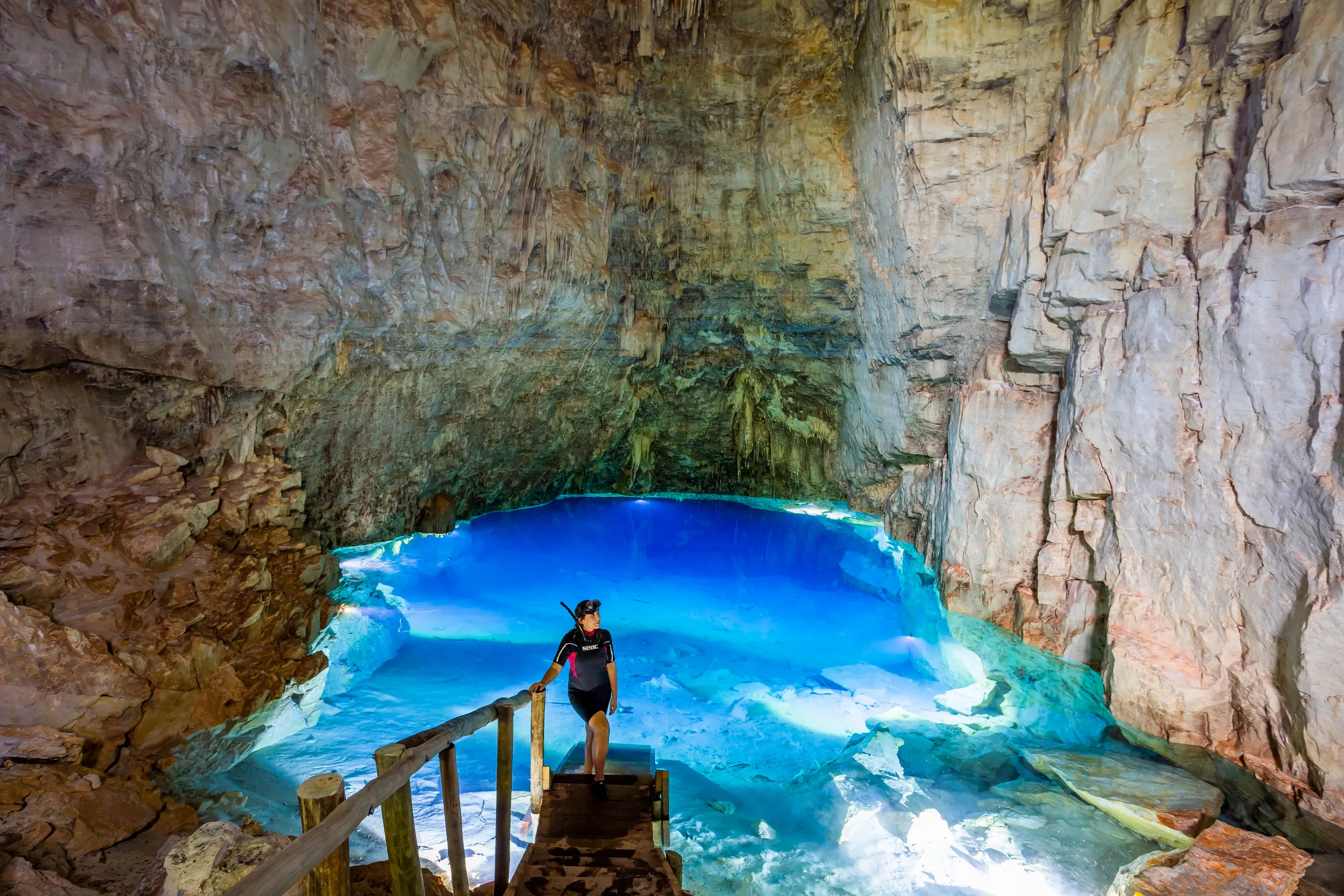
A State at the Crossroads of Three Worlds
Mato Grosso do Sul occupies a unique position in the geography of South America. Situated in Brazil's Center-West region, it sits at the convergence of three of the continent's major biomes: the Cerrado (tropical savanna), the Pantanal (tropical wetland), and the Atlantic Forest. This overlap creates a biodiversity hotspot of extraordinary richness — a place where species from three different ecological worlds meet, interact, and evolve together.
Understanding the ecology of Mato Grosso do Sul is not just an academic exercise — it is the key to understanding why this region produces such extraordinary wildlife experiences. The jaguar that hunts along a Pantanal river, the macaw that nests in a Cerrado palm, the fish that swims in a crystal-clear Bonito river — all are products of millions of years of ecological history in this remarkable landscape.
The Three Biomes
1. The Cerrado: The Ancient Savanna
The Cerrado covers approximately 40% of Mato Grosso do Sul and is one of the world's most biodiverse savannas. Often described as "the upside-down forest" — because much of its biomass is underground in deep root systems adapted to fire and drought — the Cerrado supports an extraordinary diversity of life.
Key characteristics:
- Covers 2 million km² across central Brazil (the second-largest biome in South America)
- Contains over 11,000 plant species, 44% of which are endemic
- Supports 935 bird species, 300 mammal species, and 1,200 fish species
- Considered a global biodiversity hotspot — one of the world's 36 most biodiverse and threatened ecosystems
- Maned wolf (Chrysocyon brachyurus) — the tallest wild canid in the world, with distinctive long legs that allow it to see over tall grass
- Giant anteater (Myrmecophaga tridactyla) — a prehistoric-looking insectivore that consumes 35,000 ants per day
- Giant armadillo (Priodontes maximus) — the world's largest armadillo, increasingly rare
- Scarlet macaw (Ara chloropterus) — nests in the sinkhole at Buraco das Araras near Bonito
- Hyacinth macaw (Anodorhynchus hyacinthinus) — dependent on Cerrado palm species for food and nesting
2. The Pantanal: The World's Largest Tropical Wetland
The Pantanal covers approximately 30% of Mato Grosso do Sul and is the world's largest tropical wetland — a vast, seasonally flooded plain that transforms from a semi-arid grassland in the dry season to an inland sea during the rains.
Key characteristics:
- Covers approximately 150,000 km² across Brazil, Bolivia, and Paraguay
- Recognized as a UNESCO World Heritage Site and Biosphere Reserve
- Considered the world's most productive freshwater ecosystem
- Supports the highest concentration of wildlife in the Americas
| Group | Number of Species | |---|---| | Birds | 650+ | | Mammals | 130+ | | Reptiles | 80+ | | Amphibians | 50+ | | Fish | 260+ | | Plants | 2,000+ |
The Pantanal's extraordinary productivity is driven by its seasonal flooding cycle. As the Paraguay River and its tributaries overflow their banks each wet season, they deposit nutrient-rich sediments across the floodplain, creating conditions that support enormous populations of fish, birds, and mammals. The dry season concentrates this abundance, making wildlife viewing exceptionally productive.
Threats to the Pantanal:
- Deforestation in the surrounding uplands (which feed the wetland's rivers)
- Agricultural runoff and pesticide contamination
- Illegal wildlife trade
- Climate change — increasing drought frequency and intensity
- The catastrophic fires of 2020, which burned approximately 30% of the Brazilian Pantanal
3. The Atlantic Forest: The Ancient Forest
The Atlantic Forest once covered 15% of Brazil's territory in a continuous belt along the Atlantic coast and inland. Today, less than 12% of the original forest remains — making it one of the most threatened biomes on Earth. In Mato Grosso do Sul, remnants of Atlantic Forest persist in the eastern and southern portions of the state, particularly in the Bonito region.
Key characteristics:
- One of the world's 36 biodiversity hotspots
- Contains over 20,000 plant species (40% endemic)
- Supports 850 bird species (200 endemic) and 270 mammal species (90 endemic)
- Despite covering only 12% of its original extent, still contains 60% of Brazil's threatened species
The Convergence Zone: Where Three Worlds Meet
The most ecologically interesting areas of Mato Grosso do Sul are the transition zones where the three biomes meet. The Bonito region sits precisely at the convergence of all three, creating a landscape of extraordinary complexity:
- Cerrado savannas on the upland plateaus
- Atlantic Forest gallery forests along the rivers
- Pantanal wetlands in the lowland areas to the west
Conservation Challenges and Opportunities
Mato Grosso do Sul faces significant conservation challenges:
Agricultural expansion: The state is one of Brazil's most productive agricultural regions, with large areas of Cerrado converted to soybean and cattle production. The tension between agricultural development and conservation is ongoing.
Water management: The rivers that feed Bonito's famous crystal waters are vulnerable to upstream deforestation and agricultural runoff. Maintaining the water quality that makes Bonito unique requires protecting the entire watershed.
Climate change: Increasing drought frequency threatens both the Cerrado and the Pantanal. The catastrophic fires of 2020 demonstrated the vulnerability of the Pantanal to extreme weather events.
Conservation successes: Despite these challenges, Mato Grosso do Sul has achieved significant conservation successes:
- The Bonito model of sustainable ecotourism has protected the Serra da Bodoquena landscape
- The Pantanal's jaguar population remains the world's largest and most stable
- Several private reserves and indigenous territories protect significant areas of Cerrado
- The hyacinth macaw population has recovered significantly from the lows of the 1980s
The Role of Tourism in Conservation
Responsible ecotourism is one of the most powerful tools for conservation in Mato Grosso do Sul. When local communities derive economic benefit from intact ecosystems — through tourism, guiding, and hospitality — they have a direct incentive to protect those ecosystems.
Bonito's success story demonstrates this principle clearly: the town's entire economy is built on the proposition that nature, protected, is more valuable than nature exploited. The result is a landscape that is more biodiverse and better protected today than it was 30 years ago.
The Pantanal's jaguar tourism is creating similar dynamics: landowners who once viewed jaguars as threats to their cattle now see them as economic assets, leading to a dramatic reduction in retaliatory killing.
By choosing responsible ecotourism operators like Pantanal Brazil Safaris, visitors contribute directly to the conservation of Mato Grosso do Sul's extraordinary biodiversity — ensuring that future generations can experience the same natural wonders that make this region one of the world's great nature destinations.
Solicitar Orçamento Personalizado
Pronto para viver essa experiência? Nossa equipe cria o roteiro perfeito para você.
Falar com especialista